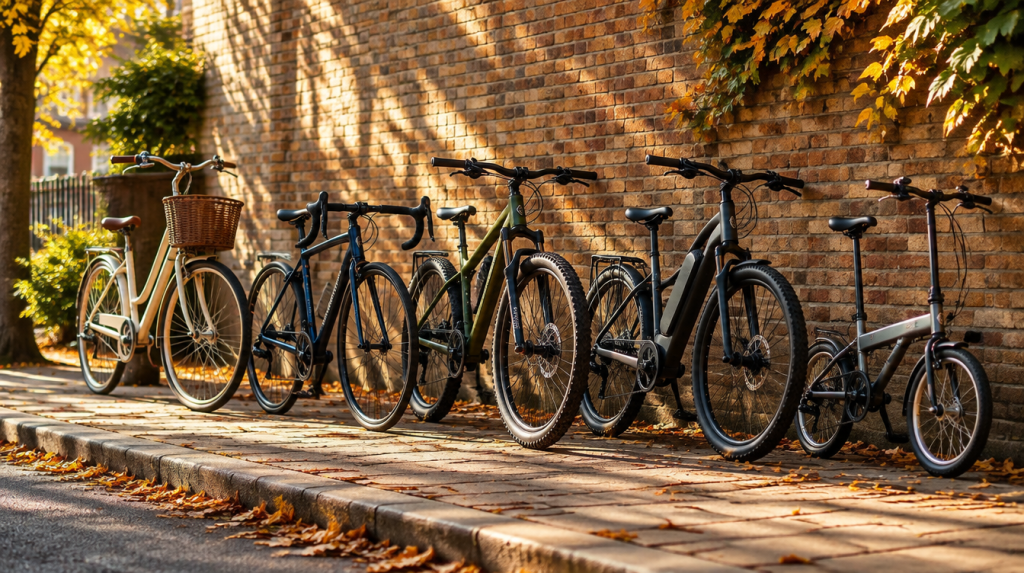
A bike is one of the easiest ways to move more every day, but walking into a shop can be confusing. There are dozens of styles, and each one is built for a different kind of riding. The best choice starts with one question: where and how will you ride most of the time?
For short trips around town: a city bike
City bikes are made for comfort over short distances. You sit upright, so you can see traffic and your back stays relaxed. Most come with mudguards, a chain guard and often a rack or basket, so you can ride in everyday clothes and carry shopping. They are not built for speed, but for riding to the shops, the station or a café they are hard to beat.
For commuting and mixed riding: a hybrid bike
A hybrid sits between a road bike and a mountain bike. It has flat handlebars, a fairly upright position and tyres that cope with both smooth roads and gravel paths. If you want one bike for commuting during the week and easy rides at the weekend, a hybrid is usually the safest first choice.
For speed and longer distances on roads: a road bike
Road bikes are light, with narrow tyres and drop handlebars that let you lean forward. That position takes a little getting used to, but it makes covering long distances on smooth roads much easier. They suit people who want to ride for fitness, join group rides or build up to longer routes. They are less comfortable on rough paths and usually have no space for luggage.
For trails and rough ground: a mountain bike
Mountain bikes have wide, grippy tyres, strong brakes and suspension to absorb bumps. They are built for forest trails, rocky paths and steep ground. On roads they feel slower and heavier, so they make most sense if you live near trails and want to ride off-road.
For roads and gravel alike: a gravel bike
Gravel bikes look like road bikes but have wider tyres and a more relaxed position. They handle tarmac, farm tracks and forest roads equally well, and many have mounts for bags, so they suit longer days out and light touring. If you enjoy exploring and don’t want to stick to one surface, a gravel bike is worth a look.
For hills, longer commutes or less effort: an electric bike
An electric bike has a motor that helps as you pedal. You still ride and still get exercise, but hills and headwinds become much easier. E-bikes suit longer commutes, hilly areas and anyone returning to cycling after a long break. They are heavier and cost more, so check the battery range and where you will store and charge it.
For small homes and mixed journeys: a folding bike
Folding bikes fold down in seconds to fit under a desk, in a car boot or on a train. They are ideal if you combine cycling with public transport or have little storage space at home. The small wheels make them less suited to long rides, but for short, practical trips they are very convenient.
For relaxed rides by the sea or in the park: a cruiser
Cruisers have wide, soft saddles, swept-back handlebars and a laid-back riding position. They are made for slow, comfortable rides on flat ground, not for hills or distance. If your idea of cycling is a gentle ride along the promenade, a cruiser does exactly that.
A few things to check before you buy
- Size matters more than features. A bike that fits well is more comfortable and easier to control. Ask the shop to check the frame size and saddle height.
- Take a test ride. Even a few minutes tells you whether the position feels right.
- Think about where you’ll keep it. Storage and carrying it up stairs can matter as much as the ride.
- Budget for the basics. A helmet, lights and a good lock are part of the cost of riding safely.
Keep it simple
The right bike is simply the one you will want to ride. Start from where you ride most, choose the type built for that, and you will spend far less time deciding and far more time out on the bike.